Archive for the ‘Sustainability’ Category

Cause and Effect (or Robbing Peter to Pay Paul)

Monday, June 28th, 2010

Energy savings analysis has been around for years. There are any number of Internet-based calculators, formulas and procedures for estimating the savings associated with products or actions undertaken to reduce or avoid energy usage. Energy savings is but one component of a much more comprehensive analytical process referred to as life cycle analysis or LCA. But LCA is not nearly so well-defined. Unlike energy savings analysis, which considers a limited number of variables that can be reasonably well defined and quantified, there is no uniform procedure for LCA.

There are some Internet-based calculators for LCA, but they range from being over-simplified to exceedingly complex; from being biased toward individual products or special interests to being overly generic and meaningless. Some approaches to LCA only consider short term direct financial burdens while others consider more indirect or subjective costs both upstream and downstream in the life of a product.

A mainly financial LCA approach for comparing roof systems might consider the following:

  • Installation – product cost, installation costs, tear-off costs, disposal costs, business disruption costs.
  • Long Term Durability – routine maintenance costs, roof replacement costs.
  • Repairs – roof repair costs, interior damage repair costs.
  • Energy Savings – estimated savings, rebates and incentives.
  • Warranty – cost premiums.

On the other hand, a highly comprehensive environmental-based approach might entail the evaluation of all material and energy inputs and outputs at every stage, from the creation of natural resources through extraction, manufacture, use, and demolition, and disposal of a product. Consider the complexity of the following extreme LCA flow example:

BANG → Earth Appears → Life Begins → Dinosaurs/Other Creatures Appear → Creatures Die/Turn Into Fossil Fuels → Human Race Appears/Evolves → Resources Extracted (fossil fuels, salt, etc.) → Resources Transported to be Processed/Refined → Process/Refine Raw Materials → Process Components (film, scrim) → Produce Product Components (membrane, rigid parts, etc.) → Transport for Fabrication → Fabricate and Assemble The Duro-Last® Cool Zone® Roofing System → Deliver to Jobsite → Installation → Roof In Action (energy savings/heat island mitigation/global warming or cooling or both) → End of Useful Life → Removal/Disposal → Recycle and/or Transport to Landfill → 100,000 to 1 Million Years of Decay and Revert to Fossil Fuels, Salt, etc. → Another BANG!? Or Re-Extraction?

Although this second example seems extreme or absurd, it makes the point that there can be limitless considerations in a comprehensive LCA. The difficulty comes in deciding how far to go and making fair and objective assumptions of all criteria at each stage in the life of the product or system. One of the best things LCA helps accomplish is identification of opportunities for improvement. The important thing to remember in addressing this continuous improvement process is to remember that every action has a reaction, so don’t rob Peter to pay Pa

Will Climategate Freeze Up Cool Roofing Sales?

Tuesday, May 25th, 2010

In case you haven’t seen it in the news recently, another conspiracy and cover-up has been discovered and is being referred to as “Climategate.” It seems there has been some manipulation of the database of historical temperature data that has been used to support the concept of global warming. A string of emails between scientists has been uncovered that indicates there has been some manipulation and/or deletion of data that did not support global warming theories, bringing into question the validity of graphs and studies that suggest the earth is warming because of human activities.

So what does this have to do with cool roofing? Can cool roofing really influence global climate? Energy Secretary Steven Chu thinks so. Some studies have shown that cool roofing can indeed help reduce urban heat islands. This may be true, but given the recent buzz noted above, is the data in those studies also suspect?

There may be some influence on urban heat islands from cool roofs, but the real and practical proven influence cool roofing has is on energy usage. Science isn’t even necessary to prove to building owners that cool roofing reduces air conditioning needs. All that a building owner needs to do is open his or her July utility bill.

Savings in summer electricity use for air conditioning is real, and even if there is some heating penalty (the idea that white roofs will prevent a building from warming up in winter), that penalty is almost always less than the benefits from reduced cooling loads.

Duro-Last® Roofing, Inc. Honored with Oregon Governor’s Sustainability Award

Tuesday, May 4th, 2010

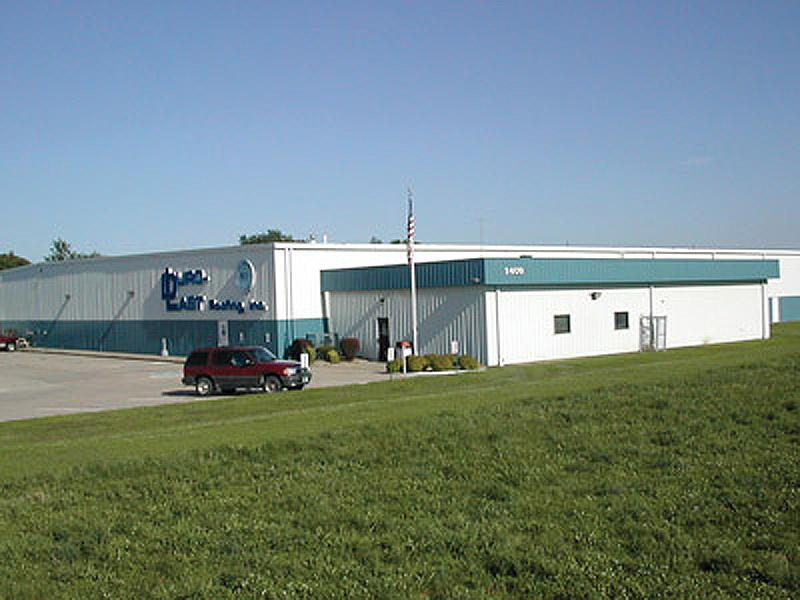
Duro-Last® Roofing, Inc’s., Grants Pass, Oregon facility was honored on April 22, 2010 at the Future Energy Conference for the company’s commitment to sustainable business practices. Duro-Last was one of seven Oregon companies and non-profit organizations that were chosen as leaders in sustainability in the state.

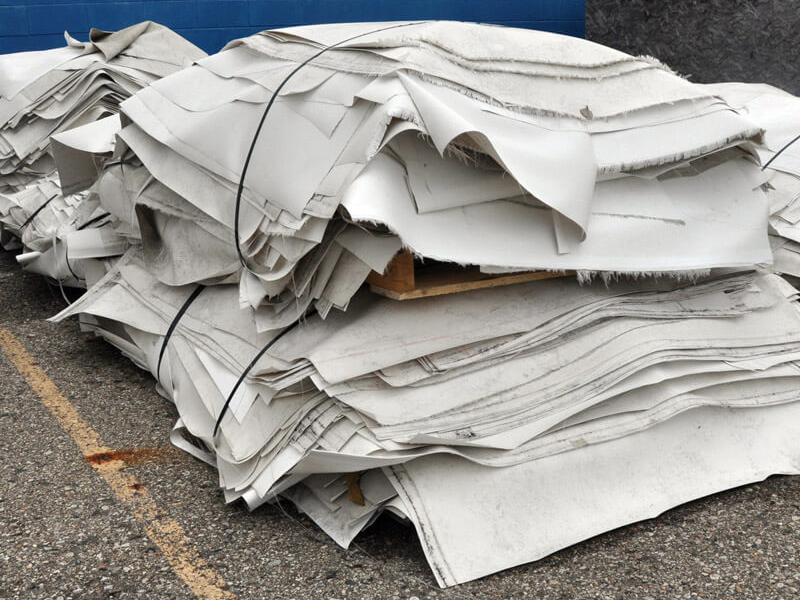
“We are honored to be recognized by a state that has very high sustainability standards,” said Tim Hart, Vice President of West Coast Operations for Duro-Last. “Our roofing system is highly reflective, which translates to energy savings for our building owner customers. We’re also proud to have a recycling program in place. We recycle 100% of the scrap we generate during production. Plus, we take back our roofs – some installed more than 20 years ago – and we also accept vinyl material from other businesses in Southern Oregon.”

Vinyl collected in Grants Pass is shipped back to Duro-Last headquarters in Saginaw, Michigan, where a subsidiary re-processes it into commercial flooring systems, expansion joints and other products.

“To date we have installed 40 million square feet of energy-efficient, recyclable roofs in the state of Oregon,” Hart concluded.

“Today we can see how the private sector and public sector alike understand that sustainability means jobs, a cleaner environment and stronger communities. These efforts generate enthusiasm for sustainability in ways that help us bridge Oregon’s urban-rural divide”, Secretary of State and Sustainability Board Chair Kate Brown said.

Tim Hart (right) accepting award from Oregon State Treasurer Ted Wheeler on behalf of Duro-Last.

A Sighting of Bigfoot

Wednesday, April 7th, 2010

Recently, I have received questions about carbon content and carbon footprints associated with roofing. Before we can track down the source of those footprints we need to know what we’re searching for.

The technical definition of a carbon footprint is that it is a measure of the amount of carbon dioxide produced by a person, company, business or country over a given time. A more generic definition is that it is a measure of the impact human activities have on the environment based on the greenhouse gases produced. This second definition includes more than just carbon dioxide produced.

A primary carbon footprint considers the most direct impacts, like the use of a car or airplane. A secondary carbon footprint looks more at the entire lifecycle of activities or processes, such as with the production of a product. There are lots of theories as to how and what to measure to determine an individual carbon footprint. Numerous calculators attempt to put a numerical value to a product’s or process’ carbon footprint, but there is no single agreed-upon standard. The concept of “cap and trade” is even being debated as a means to controlling carbon footprints.

The cap and trade issue deals with controls placed on total carbon dioxide emissions. Contrary to what many people think, cap and trade is not a policy for regulating Wall Street or providing health care. A Rasmussen poll found that 76% of Americans have no clue what cap and trade means. Yet, the system, if implemented, is essentially a tax that could have broad implications for the costs of generating electricity or producing goods and services. With this scheme, carbon emissions are limited or capped and an organization is allocated an allowance for the amount it can emit. Then, companies buy and sell capacity based on whether they are emitting more or less than their quota. This could have the effect of shifting power plants from using coal, an abundant resource in the U.S., to natural gas to generate electricity.

Natural gas is the main fossil fuel source for producing ethylene used in making the vinyl chloride monomer (VCM). VCM is a key component in polyvinyl chloride (PVC or vinyl). Increases in natural gas demand will increase its price and increase costs to producers of vinyl products, including roofing and other construction components.

This is a very complex interconnected issue that is being hotly debated. There will no doubt continue to be many changes to environmental regulations in the near future. Construction specifiers are anticipating these changes and are beginning to include them in their design considerations. Construction and facility management professionals should stay informed to be able to respond appropriately.

Cool Roofing Tax Incentives

Monday, March 22nd, 2010

Two main Federal tax incentives exist for installation of cool roofing, but as with any Federal government program there are qualifications that need to be met.

Residential Tax Credit

At this time, single-ply membranes are not eligible for a tax credit on residential applications. However, if additional insulation is installed during roof replacement, the cost of the insulation can be claimed as a credit.

Commercial Tax Deduction

In general, tax law allows a deduction for part or all of the cost of energy efficient building property that the taxpayer places in service between December 31, 2005 and December 31, 2013. Several conditions must be met to qualify for the commercial tax deduction:

1. The building must be within the U.S. and must meet the requirements of ASHRAE Standard 90.1-2001 – Energy Standard for Buildings Except Low-Rise Residential Buildings.

2. To qualify for the maximum total combined deduction for all lighting, HVAC, hot water, and building envelope property installed, the total annual energy and power costs of the building must be reduced by at least 50 percent.  A partial deduction is allowed for each separate building system. The IRS set the following target reductions in March 2008:

  • Interior lighting – 20%
  • HVAC and hot water – 20%
  • Building envelope – 10%

Cool roofing is partially qualifying if it is estimated to reduce the total annual energy and power costs by 10 percent or more. The maximum deduction amount for partially qualifying property is $0.60 per square foot of the building.

3. The Performance Rating Method (PRM) must be used to compute the percentage reduction. Calculations are based on a reference building located in the same climate zone as the taxpayer’s building and containing the new building component that has been incorporated, but is otherwise identical to the reference building. The Department of Energy maintains a list of qualified software to be used to calculate energy and power costs for certification.

4. To claim the deduction, the taxpayer must obtain a certification provided by a qualified individual. The taxpayer is not required to attach the certification to the tax return, but the taxpayer must maintain proper records to establish the entitlement. A qualified individual:

  • is not related to the taxpayer claiming the deduction;
  • is an engineer or contractor that is properly licensed as a professional engineer or contractor in the jurisdiction in which the building is located; and
  • Has represented in writing to the taxpayer that he or she has the requisite qualifications.

A certification must contain:

  • the name, address, and telephone number of the qualified individual;
  • the address of the building to which the certification applies;
  • one of five statements (as outlined by the IRS) explaining the manner in which the building envelope property satisfies energy efficiency requirements.

Frequently Asked Questions about PVC Roofing Systems: Part 7

Thursday, March 18th, 2010

This is the final posting in a seven part series.

Q:        I’ve heard that PVC cannot be recycled. Is this true?

A:        No. In fact, PVC is inherently recyclable. Vinyl materials can be reprocessed and recycled repeatedly, and PVC is the only roofing material that has proven to be recyclable back into new roofing products. In Europe, PVC roofing materials have been recycled for nearly 15 years. In the U.S., more than one billion pounds of post-industrial vinyl are recycled annually, and that number is growing. Many U.S. PVC roofing manufacturers have established recycling programs, including Duro-Last Roofing, Inc.’s sister company, Oscoda Plastics, Inc. has recycled an annual average of almost six million pounds of vinyl over the last three years using PVC scrap from at least 20 sources representing at least 10 types of products, including film, sheeting, seats, air domes, automotive and, of course, roofing.

The Vinyl Roofing Division of CFFA initiated a feasibility study for national recycling in January of 2008. PVC can also be safely incinerated to recover and use the latent energy, or land-filled. In fact, many landfills use PVC liners to contain contamination.

Q:        Didn’t the U.S. Green Building Council (USGBC) just propose a new LEED system for health-care facilities that awards sustainability points for avoiding halogenated products like PVC?

A:        Yes. Last November, the USGBC issued a draft proposal for LEED for Healthcare (LEED-HC) that would award points for avoiding all halogenated materials, including PVC. To date, LEED-HC has undergone two public comment periods, ending February 19, 2008 with many  organizations and member companies questioning a rating system that ignores the conclusion of their own five-year study on PVC building materials. What’s curious about the LEED-HC proposal is that it was issued just a few months after its own Technical and Scientific Advisory Committee (TSAC) issued its final report to the USGBC’s LEED Steering Committee (LSC) on the technical and scientific  basis for PVC-related credits within the LEED Green Building Rating System. Like so many other exhaustive LCA studies, the five-year TSAC study is the best environmental option.

Q:        Where can I go for more information about the safety, sustainability, use and performance of PVC roofing systems, or PVC in general?

A:        There are plenty of places to get solid, scientifically-proven information about PVC products and roofing materials:

The Vinyl Institute

Vinyl Roofing Division of CFFA

The Vinyl Environmental Council (Japan)

Vinyl In Design

Phthalate Information Center

ASTM International

The Cool Roof Rating Council (CRRC)

Duro-Last Roofing, Inc.

ENERGY STAR ratings

ENERGY STAR Roof Products energy savings calculator

Green Globes, Environmental Assessments for Buildings

Lawrence Berkeley National Laboratory

Single Ply Roofing Industry Association (SPRI)

U.S. Green Building Council, LEED Program

Why Cool Roofs Are Way Cool

Wednesday, March 3rd, 2010

By Cool Roof Rating Council

A cool roof reflects and emits the sun’s energy as light back to the sky instead of allowing it to enter the building below as heat. In many climate zones, a cool roof can substantially reduce the cooling load of the building, providing several direct benefits to the building owner and occupants:

  • Increased occupant comfort, especially during hot summer months
  • Reduced air conditioning use, resulting in energy savings typically – 10-30%1, and
  • Decreased roof maintenance costs due to longer roof life.

Cool roofs benefit the environment and public health in additional ways. As recognition of these benefits has become more widespread, cool roof requirements are appearing in building energy codes and green building programs across the nation.

Climate Change Mitigation

Cool roofs reduce greenhouse gas emissions by conserving electricity for air conditioning; less CO2 is emitted from power plants. Cool roofs also help cool the world, simply by reflecting the sun’s energy back to the atmosphere, thereby mitigating global warming. A Lawrence Berkeley National Laboratory study found that world-wide reflective roofing will produce a global cooling effect equivalent to offsetting 24 gigatons of CO2 over the lifetime of the roofs. This equates to $600 billion in savings from CO2 emissions reduction.2
Urban Heat Island Mitigation

Cities can be 2º to 8ºF warmer than surrounding areas due to dark materials, including roofs, which absorb the sun’s light energy as heat during the day and release it at night as heat.3 This phenomenon prevents air from cooling down at night and results in higher temperatures being maintained longer. By immediately reflecting solar radiation back into the atmosphere and reemitting some portion of it as infrared light, cool roofs result in cooler air temperatures for urban environments during hot summer months.

Urban Heat Island Profile

Reduced Smog

Cool roofs, through mitigation of the urban heat island effect and reduction of ambient air temperatures, in turn improve air quality. Smog is created by photochemical reactions of air pollutants and these reactions increase at higher temperatures. Therefore, by reducing the air temperature, cool roofs decrease the rate of smog formation.

Public Health Benefits

Lower ambient air temperatures and the subsequent improved air quality also result in a reduction in heat-related and smog-related health issues, including heat stroke and asthma.

Peak Energy Savings and Grid Stability

Because cool roofs reduce air-conditioning use during the day’s hottest periods, the associated energy savings occur when the demand for electricity is at its peak. Therefore, cool roofs reduce stress on the energy grid during hot summer months and helps avoid shortages that can cause blackouts or brownouts. In addition, for building owners that pay for energy based on the time of use, they save energy – and more money – when it is at its most expensive.
Secondary Energy Benefits

Cool roofs directly reduce air conditioning use for buildings by reducing heat gain in the building below, but they also indirectly reduce air conditioning use in urban areas by helping lower ambient air temperatures. Cooler daytime temperatures mean that buildings and vehicles use less air conditioning and save additional energy. In turn, this results in a reduction in the CO2 emissions from electricity generating power plants.

The Cool Roof Rating Council (CRRC) is a non-profit membership organization. Formed in 1998, the CRRC maintains a credible, third-party rating system to measure and label the radiative properties of roofing materials. Please visit the CRRC at www.coolroofs.org.

1Energystar.gov

2 Akbar, H. (2008). Global Cooling: Increasing Solar Reflectance of Urban Areas to Offset CO2. In press, Climate Change.

3 Energystar.gov

Basics of Insulation and Cool Roofing

Wednesday, February 10th, 2010

There are two main purposes for insulation. Insulation helps keep heat in during the winter and helps keep heat out during the summer. Whenever there is a temperature difference between the inside and outside of a building, heat tends to flow from the warmer to the cooler space. Insulation reduces or slows the heat transfer through the building envelope.

By understanding how heat moves, it is easier to understand how insulation works. There are three modes of heat transfer: conduction, convection, and radiation.

CONDUCTION is direct heat flow through matter. It is caused by fast moving molecules on the hot side colliding with and transferring energy to slower moving molecules on the cold side. It results from actual physical contact of one part of the same body with another part, or of one body with another. An example of conduction through contact is a cooking pot on the solid surface of a hot stove.

COVECTION is the transport of heat within air or liquid, caused by the actual flow of the material itself. Warm air rises and cold air falls to create a convection loop. The moving air either enters or exits a building during this process. Up to 45% of heat loss in winter happens through convection through the roof.

RADIATION is the transmission of electromagnetic rays through space. The radiant heat rays of the sun do not become heat until they strike an object such as the roof of a building. As the roof surface heats up, the heat energy is transferred by conduction throughout the rest of the roof mass. Infrared radiation from the sun is the source of 93% of the summer heat gain through a roof.

Thermal insulation does not stop the transfer of heat into or out of a building; it only slows down the transfer. R values are a means of showing the thermal value of an insulating material. R value is a measure of resistance to heat transfer by conduction and does not apply to other methods of heat transfer. Insulative materials act to hinder the flow of energy by using a gas and randomness of material to reduce direct contact (conduction) and air flow (convection).

R value has no utility to measure the reflective capability of a material. Highly reflective materials act to keep a surface cool by reducing the amount of the sun’s energy that is absorbed (radiation). The energy that is not reflected is either absorbed or emitted by the surface. The amount of radiation that is emitted is a function of the emissivity factor of the material. The most effective cool roofing materials then, are those with both high reflectivity (sun’s energy bounces off) and high emittance (easily sheds energy that is absorbed). A good cool roofing system combines reflective membrane with an optimum amount of insulation to reduce heat loss from convection in winter.

Solar Reflectance Index

Wednesday, January 20th, 2010

Reflectivity, or albedo, is the percentage of the sun’s energy that is reflected by a surface. Another important measurement of a roof membrane’s performance is emittance. Emittance deals with how effectively a surface releases heat; it is the percentage of absorbed energy that a material can radiate away.

Most authorities have concentrated on reflectivity as the prime measurement of energy performance of cool roofing. However, with even the most reflective materials some energy is absorbed, and if that absorbed energy is not released efficiently it can cause a roof to heat up.

There is another measurement, called the solar reflectance index (SRI), that is beginning to get some attention. SRI combines reflectivity and emittance to measure a roofs overall ability to reject solar heat. The calculation of this index is defined by ASTM E 1980-01 and is based on some rather complicated math that includes values for solar absorptance, solar flux, thermal emissivity, the Stefan Boltzmann constant, and various other coefficients. Standard black (reflectivity 5%, emittance 90%) has an index of 0, and standard white (reflectivity 80%, emittance 90%) has an index of 100. Very hot materials can actually have negative values and very cool materials can have values greater than 100.

When all is said and done, a specific value can be calculated for any roofing product. Materials with the highest SRIs are the coolest choices for roofing.

Here is a sampling of products measured by Lawrence Berkeley Labs:

Product SRI Reflectivity Emittance
Duro-Last Cool Zone 108 87% 95%
Atlanta Metal Products, Kynar Snow White 82 67% 85%
Black EPDM -1 6% 86%
Sarnafil White 104 83% 92%
White Granular Surface Bitumen 28 26% 92%
Trocal Roofing Systems, White 104 83% 90%
Light Gravel on BUR 37 34% 90%

PVC Roofing

Thursday, December 10th, 2009

Noted roofing authority, Richard L. Fricklas, discusses PVC roofing in Buildings Magazine’s December 2009 Newsletter.

For the last year, attention seems to be more on cool roofing, LEED, and vegetated roofs rather than what the roofing system is made of or what it can do. Maybe because current roofing systems are all well established, so they’re no longer newsworthy? Several claims are being made as to which manufacturer has lowest carbon footprint and which products are truly recyclable.

To read the full article click on the link below.

PVC Roofing

Posted using ShareThis